

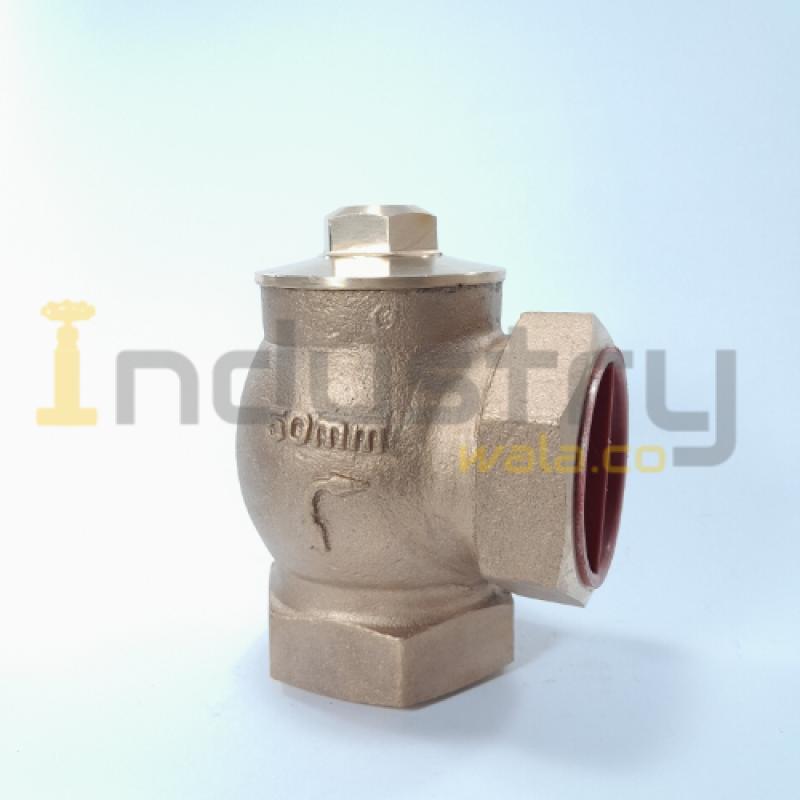
A check valve, also known as a one-way valve or non-return valve, is a device that allows fluids to flow in only one direction. The primary purpose of a check valve is to prevent backflow in a system. The Bronze Angle Lift Check Valve is widely used in industrial applications due to its durability and efficient non-return function. Check valves are cost-effective, efficient, and easy solutions to potential flow issues. Backflow can cause problems when the media is contaminated, as it may flow backward and affect upstream components. For example, in a sewer line, a non-return valve ensures that waste flows out of the system but does not re-enter it.
Check valves operate differently depending on their design. One of the most common designs is the spring-loaded in-line check valve, which has a simple and effective mechanism. When flow enters the inlet port, the pressure must be sufficient to overcome the cracking pressure and spring force. This pressure pushes the disc open, allowing fluid to pass through the valve. When inlet pressure decreases or back pressure occurs, the spring and reverse pressure push the disc back onto the seat, sealing the valve. The spring and short disc travel enable quick closing and help prevent pressure surges in the pipeline.
A ball check valve uses a free-floating or spring-loaded ball that rests on a sealing seat to close the orifice. The seat is typically conically tapered to guide the ball into position and create a tight seal, preventing reverse flow. When inlet pressure exceeds the cracking pressure, the ball is pushed off the seat, allowing fluid to flow. If inlet pressure drops or back pressure develops, the ball returns to the seat by spring force or back pressure, closing the valve.
A Lift Check Valve Screwed End, such as the Bronze Angle Lift Check Valve, consists of a guided disc that lifts off the valve seat to allow media flow. The disc requires sufficient pressure to overcome gravity and/or spring resistance. A guide keeps the disc aligned vertically so it can reseat properly and form an effective seal. In many designs, the media is forced to make a 90-degree turn, and if no spring is present, proper mounting orientation is important to ensure the disc closes using gravity. This makes it a reliable choice for steam, water, and process pipelines.
A swing check valve, also known as a tilting-disc or flapper check valve, has a disc mounted on a hinge or trunnion that swings open with inlet pressure. As inlet pressure decreases or backflow occurs, the disc swings shut. When no spring assists the closing action, correct installation orientation is essential so gravity can help close the disc. A dual disc or double door check valve uses two semicircular discs hinged on a central pivot point, allowing them to open and close independently.
If you are looking to buy bronze angle lift check valve, this type offers excellent corrosion resistance and long service life. You can also compare bronze check valve screwed end price to find the best solution for your industrial requirements, ensuring reliable performance and efficient backflow prevention.